
Are Your Boundaries Actually Walls?
When I first began exploring the difference between boundaries and walls, I realized how often I had built walls instead of setting healthy boundaries. Inspired by Betty Martin’s The Wheel of Consent, I’ve come to see boundaries as an invitation to create a safe, nurturing container for connection both with myself and others. Walls, on the other hand, often emerge when my nervous system is in a state of protection, guarding me from perceived threats.
“Boundaries invite connection, while walls create separation.”
What often goes unseen is this: When my boundaries were unclear, I often thought I was protecting myself, but I was really just keeping everyone at a distance—including myself. I believed saying “no” was selfish, when in reality, a conscious “no” can be the most loving response for all involved.
What You Believe vs. What’s True
Many of us believe that setting boundaries pushes people away, but the truth is, clear boundaries can actually draw us closer to those we love. When we communicate our needs with compassion and clarity, we create a sense of safety and trust in our relationships. Why does this matter right now? Because if you’ve been struggling to find balance in your connections, healthy boundaries might be the missing piece.
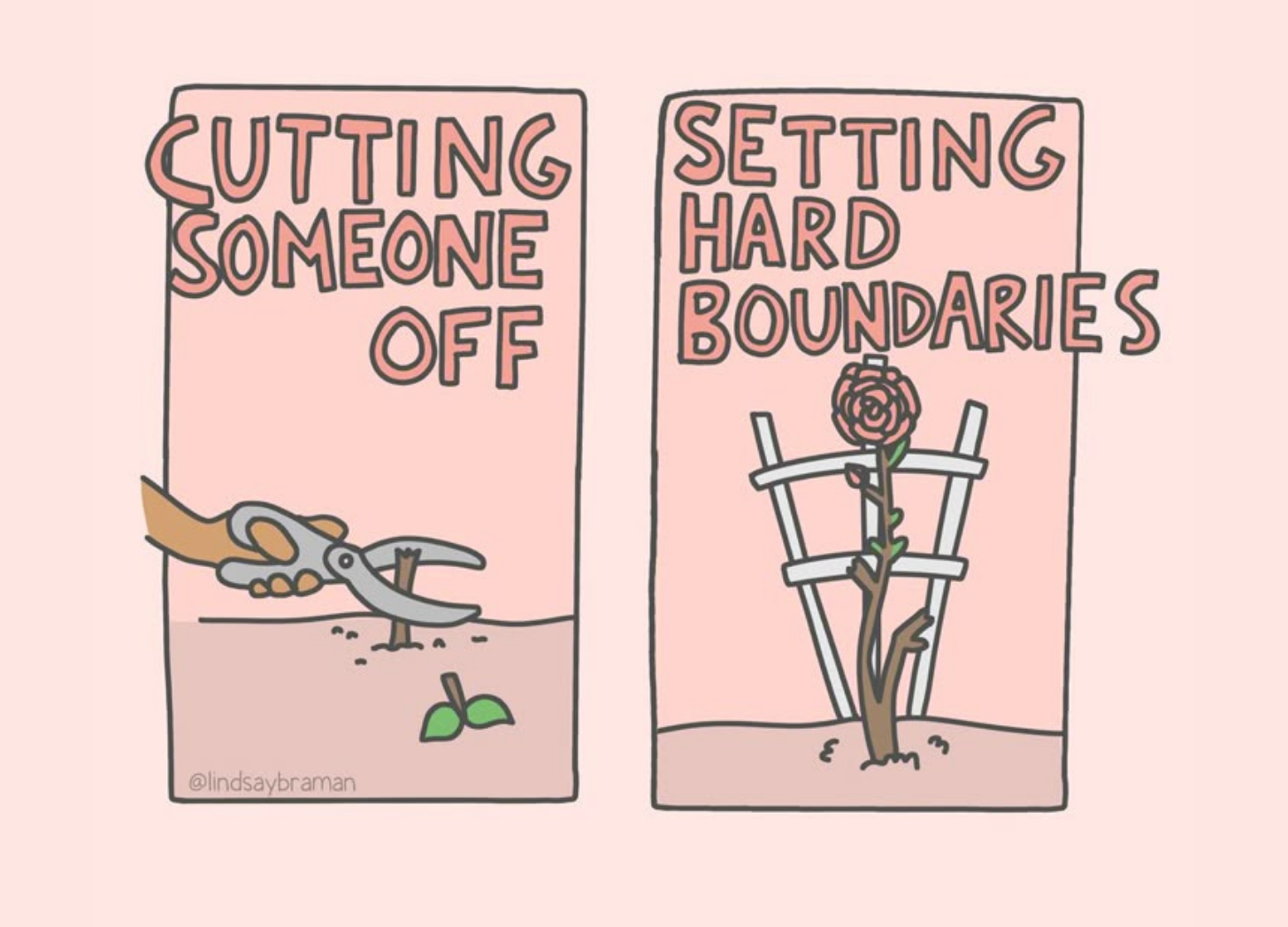
source: Pinterest @lindsaybraman
Learning to Ask for Alone Time
As a mother of two, I struggled with setting boundaries around my need for alone time. I often felt guilty for wanting space, as if asking for time to fill my own cup meant I was failing as a mom. I would push myself to be available all the time, believing that self-sacrifice was the same as love.
But over time, I realized that when I denied myself rest, I couldn’t show up fully present for my daughters. By setting a boundary and giving myself permission to take breaks, I found that I could return to them with more patience, love, and energy. Learning to say, “I need a moment to recharge,” wasn’t just an act of self-care—it was an act of love for my whole family.
The Wheel of Consent: A Tool for Setting Healthy Boundaries
Betty Martin’s The Wheel of Consent beautifully illustrates how boundaries and consent go hand in hand. The Wheel teaches us to explore the dynamics of giving and receiving, allowing and taking. It invites me to ask myself:
What am I truly willing to offer or receive?
Where do I need to set a boundary to honor my own limits?
How can I communicate my boundaries with love and clarity?
The Wheel also reminds me that consent is an active, living process. What feels good today might not feel good tomorrow, and that's okay. Boundaries are not static; they are dynamic and need to be revisited often with a sense of curiosity and compassion.
The Wheel of Consent by Dr. Betty Martin
How to Set Boundaries Step-by-Step
Identify When a Boundary Has Been Crossed:
Notice if a situation makes you feel angry, anxious, or overwhelmed.
Pay attention to your body’s signals—heart racing, shallow breath, or a feeling of tightness in your chest may indicate that a boundary has been crossed.
Communicate Your Boundary:
Be clear, direct, and maintain a respectful tone.
Remember, “No” is a complete sentence.
You don’t need to over-explain or justify your boundary.
Use “I” statements to express how you feel and what you need.
Set Consequences:
Clearly communicate what will happen if your boundary is crossed. For example, “If you continue to raise your voice, I will leave the room.”
Avoid using harsh ultimatums; instead, focus on protecting your well-being.
Expect Pushback:
Know that others may react with resistance, but your job is to remain firm.
Try not to take their response personally. Their discomfort may stem from not having their own healthy boundaries.
Honor Your Boundaries by Aligning with Your Values:
If you value your well-being, practice saying “no” when it’s not a true “yes.”
To maintain your energy and clarity, prioritize personal time and routines, such as a morning ritual.
If growth is important to you, challenge yourself by testing your limits, even when it feels uncomfortable.
For honesty, commit to being real with yourself and others, addressing and adjusting as needed.
Show respect for yourself by standing up for your needs and removing yourself from situations where respect is lacking.
When you value your space, make sure you take the alone time you need to recharge.
What Negative Reactions to Boundaries Say About Others
If someone reacts negatively when you set a boundary, it often reveals more about them than about you. Healthy, emotionally mature people typically respect boundaries even if they don’t fully understand them. A strong reaction might indicate:
An inability to regulate their own emotions.
A habit of overstepping boundaries in their own lives.
Unresolved feelings about not being able to set boundaries themselves.
Remember, someone’s resistance to your boundary is not a sign that you need to back down. It is an opportunity to practice self-compassion and stay anchored in your truth.
What Do Healthy Boundaries Sound Like?
Setting healthy boundaries often involves clear and compassionate communication. Some examples of healthy boundaries might sound like:
“I need some time to think about that. I’ll get back to you.”
“I’m not comfortable discussing this right now.”
“I appreciate the invite, but I’ll have to pass.”
“I need some space to process my feelings.”
Exploring Different Types of Boundaries
Physical Boundaries: Define how you want to be touched or how close someone can be to you.
examples:
“Could you please give me some personal space?”
“I don’t hug people. Can we shake hands instead?”
Emotional Boundaries: Protect your emotional well-being by setting limits on how much you share or engage emotionally.
examples:
“I appreciate your concern, but I’d prefer to handle this on my own.”
“I’m not in a place to share my feelings right now.”
Time Boundaries: Help manage how you spend your time and energy.
examples:
“I need to prioritize my self-care, so I won’t be available for the next few days.”
“I have prior commitments and won’t be able to make it.”
Intellectual Boundaries: Respect your thoughts, ideas, and beliefs.
examples:
“I’m not comfortable discussing this topic.”
“I respect your opinion, but I’d rather not engage in this conversation.”
Family Boundaries: Establish limits with family members to protect your well-being.
examples:
“It’s not okay when you comment on my appearance. I’d like you to stop.”
“I understand you want to help, but I need to make my own decisions.”
Work Boundaries: Maintain a healthy work-life balance and respect professional limits.
examples:
“I want to give my best work, but I won’t be able to respond to emails after 6 PM.”
“I’m not comfortable taking on additional responsibilities without more support.”
Know someone who might find this post helpful on their journey with boundaries, feel free to share it with them. Together, we can nurture collective healing.
The Role of the Nervous System in Boundary-Setting
Setting boundaries is not just a mental exercise—it’s a somatic practice. Our nervous system needs to feel safe to create and maintain boundaries. When you set a boundary, notice how your body responds. Do you feel a sense of relief, or does tension arise? Using breathwork, grounding techniques, or gentle movement can help support your body as you practice boundary-setting.
A Somatic Practice to Regulate Your Nervous System
Affirmations for Healthy Boundaries
When practicing boundaries, gentle affirmations can help reinforce your intentions. Try repeating:
“My needs matter.”
“I am allowed to take up space.”
“It is safe for me to set boundaries with love.”
↑ If you're exploring boundaries and stepping into your power, I’ve created a library of trauma-informed meditations that might support you on that journey.
The Healing Power of Boundaries
As I practice setting healthy boundaries, I notice how much safer I feel in my body. Boundaries help me remain in my Embodied Self Energy, where I can respond to life with openness and calm. Instead of building walls to block out discomfort, I can soften into a boundary that both protects and connects me.
When I say “no” with clarity, I create more room for authentic “yes” moments. And when I allow myself to step back when needed, I find that I can return to connection with a fuller heart and a clearer mind.
If you’re new to IFS and Embodied Self Energy and would like to explore more, you might enjoy reading this.
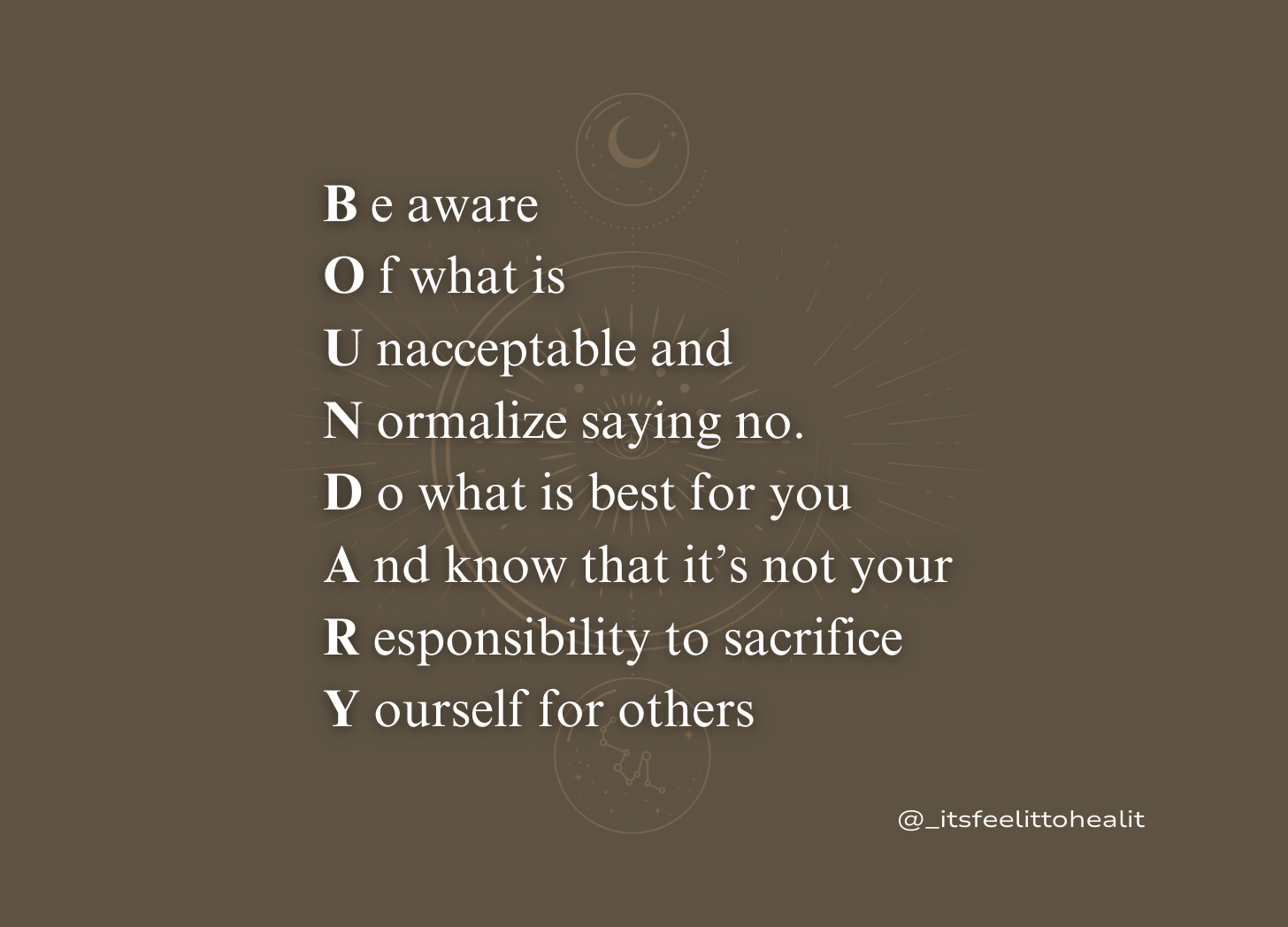
Acronym inspired by Pinterest
What Boundaries Are You Ready to Set?
If this resonates with you, I invite you to reflect on where you might need more boundaries or where walls have been keeping you from true connection. You might journal on questions like:
What do I need to feel safe and respected in my relationships?
Where am I saying “yes” when I really mean “no”?
How can I honor my own needs while staying open to connection?
Share your thoughts in the comments! What boundaries are you working on setting in your own life?
Boundaries are not barriers—they are bridges to deeper intimacy with yourself and with others. They help you reclaim your sovereignty and create relationships that are built on mutual respect, trust, and love.
Thank you for sharing your time and energy with me, for feeling and healing alongside me.
Until next time, with love and gratitude.
Amanda x
